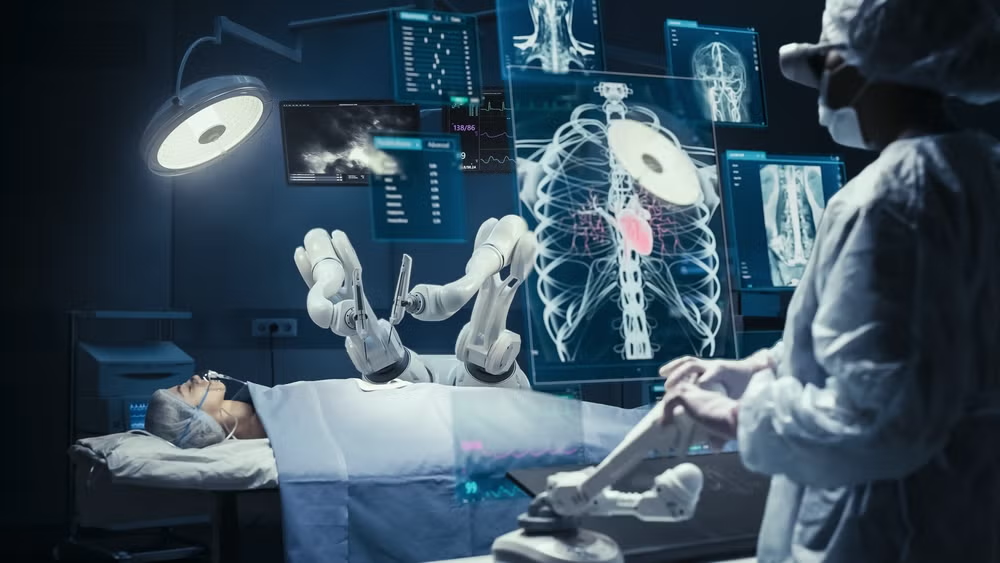
While the first wave of telemedicine focused on video consultations, “Telemedicine 2.0” is moving into the operating room. The primary barrier to remote surgery has always been latency—the split-second delay between a surgeon’s movement and the robotic arm’s response. With 5G networks offering ultra-low latency and massive bandwidth, this gap is closing.
This evolution enables:
- Remote Mentoring: Expert surgeons can provide real-time, high-definition guidance to rural clinics via AR overlays.
- Telesurgery: Surgeons in metropolitan hubs can operate on patients in remote or underserved areas using haptic-feedback robotics.
- Tactile Internet: The ability for a specialist to “feel” tissue resistance through a remote interface, bringing a physical dimension to digital care.